The Complete Guide to Buying the Perfect Dosa Tawa
12 January 2026

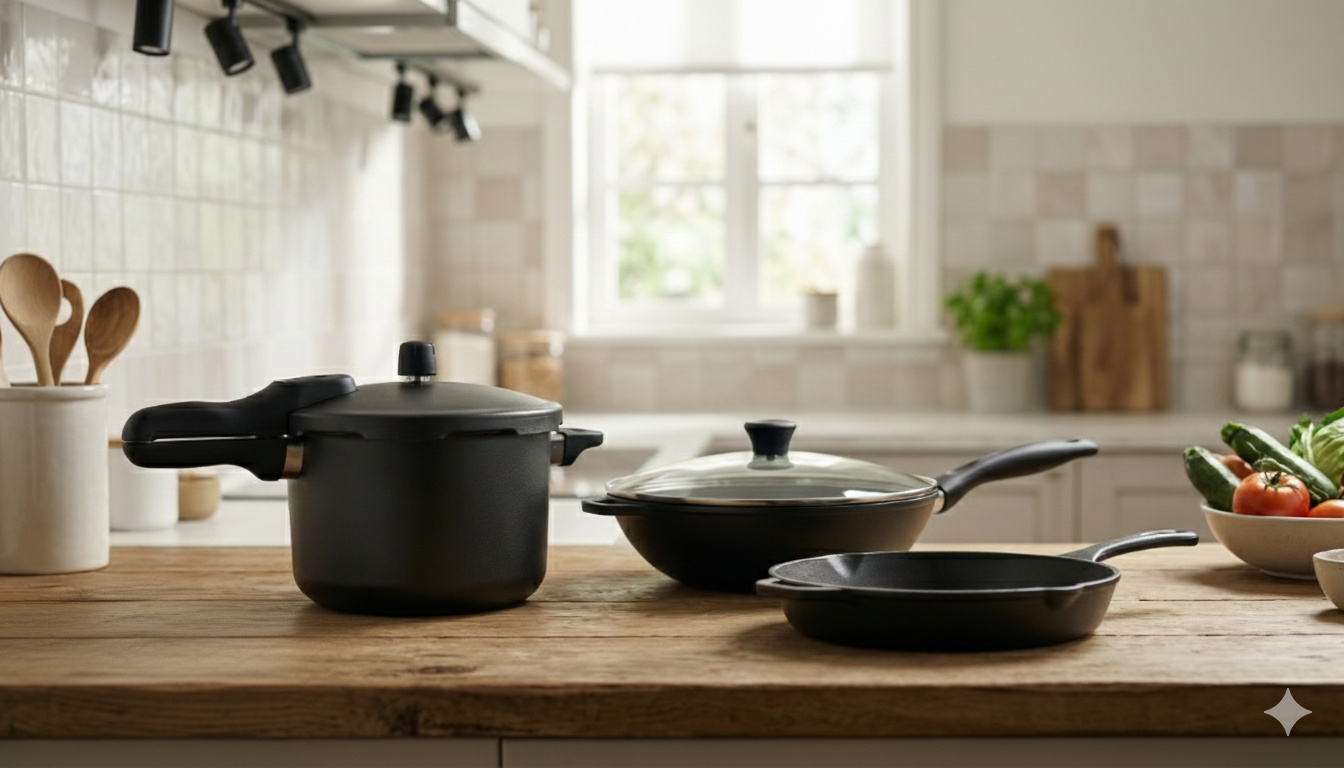
Have you ever found an old pan slipping out when opening up the kitchen cabinet? Many of us possess an unruly collection of pots and pans; perhaps your college-era pan still meets all your cooking needs, or that shiny set that promised so much and started sticking just three months after purchase?
Equipping a kitchen can seem like an impossible feat. From department stores and online websites to retailers themselves, the options can seem limitless: stainless steel, hard-anodized cast iron ceramic and copper core equipment may seem confusing enough for anyone, let alone those new to cooking! But here is an important fact: equipment matters as its role connects ingredients to dinner plates.
Excellent cookware gives the cook complete control. It heats evenly, eliminating those frustrating hot spots that burn your garlic while leaving onions raw; releases food without fuss; turning delicate fish fillets from disaster to restaurant-quality meals in no time – not to mention cleaning up after itself easily!
This comprehensive guide is meant to be an easy read. We will dive deep into the world of pots and pans, detailing exactly which are essential – such as dosa tawas or pressure cookers – as we help navigate online cookware shopping. Regardless of whether or not you consider yourself an accomplished home chef, this comprehensive guide can assist with building an arsenal that lasts.
Before purchasing any attractive set, it’s essential that you understand why professional chefs are so particular when selecting cookware sets for their kitchens. Their preference goes far beyond aesthetics – it includes consideration of physical properties as well as chemical interactions between materials. Vistaya Store is here to ensure you find the perfect compatible item!
Imagine trying to sear a steak. For an optimal sear, use high-quality cookware which efficiently distributes thermal energy across its entire surface for consistent and predictable results every time – such as using thin and cheap pans where metal directly above the flame gets scorching hot while edges remain cool, leading to burnt centers with greyed sides. Low quality pans don’t conduct heat efficiently enough allowing burnt spots on its metal directly above flame while other areas stay lukewarm as your steak goes burnt in its center while greyed edges remain. High quality cookware also allows thermal energy distribution across its entire surface area giving predictable, predictable results every time compared with low quality pans that might use thin cheap pans which simply don’t conduct it efficiently enough, giving predictable consistent results every time! High quality cookware spread thermal energy evenly across its entirety offering predictable, repeatable results every time!
When purchasing cookware online, you are making an investment for daily life. Cheap pans often warp when exposed to high heat sources like your stove top; their bottoms bow out, leaving pooled oil behind in corners; handles loosen; coatings flake off. Investing in quality materials – such as tri-ply stainless steel or heavy cast iron–means investing in gear that will withstand both high heat loads as well as kitchen mishaps that occur unexpectedly.
Your cooking vessel can have an impactful influence on the end product of your dish.
Reactivity: Certain metals such as plain aluminum or unlined copper react with acidic foods (like tomatoes, vinegar or lemon juice ) to produce metallic flavors which discolor pan and discolor food as it goes through it’s heat cycle.
Low-grade nonstick coatings may disintegrate under high heat and release harmful fumes; choosing reliable brands ensures you’re cooking on safe surfaces.
Nutritional Value: Certain cookware such as the Cast iron Dosa Tawa can actually increase the iron content of food, providing small but healthful benefits to you and your meal.
Material confusion often lies at the core of good cooking; we will explore here the pros, cons, and best uses for common cookware materials like stainless steel (SUS304). For starters.
Walk into any restaurant kitchen and you are likely to see stacks of stainless steel being utilized by its chefs – it serves as the backbone for their culinary careers!
Pros: Cast iron cookware is virtually indestructible. It won’t rust, chip, or react with acidic foods and beverages like fruit juices; simply clean with steel wool before placing in your dishwasher for use searing meat at high temperatures.
Cons: Stainless steel alone is not an efficient conductor of heat.
What to Look For: To achieve better heat distribution and durability, opt for tri-ply construction which features highly conductive aluminum or copper between two layers of stainless steel for increased conductivity and endurance. This provides both durability and heat management benefits!
Modern life can be hectic and sometimes you simply want an easy way to fry an egg quickly without using up precious time scrubbing the pan first. Non-stick pans feature non-adherence coating (usually with PTFE or ceramic) designed to prevent food particles from adhering and adhered to them during use.
Pros: Extreme ease of use is one of its key selling points; with low oil use required and delicate foods like fish or pancakes slipping off easily.
Cons: Nonstick coating is fragile. Metal utensils will scratch it easily, while temperatures over 500°F could damage its durability over time; even premium non-stick pans usually last 3-5 years before needing replacement. When selecting one for an egg breakfast or crepe brunch, cast iron may provide extra support – suitable for eggs, crepes, leftovers reheating and delicate fish dishes alike!
Cast iron is heavy and thick enough to maintain heat very effectively, which makes it perfect for searing steaks or baking cornbread. Plus it is relatively inexpensive with proper care lasting generations! A Cast iron Dosa Tawa stands as an example for crispy dosas.
Cons: Cast iron cookware can be heavy. Seasoning maintenance (seasoning) must be performed to keep it rust-free and nonstick; without this treatment it could react poorly with acidic foods if improperly seasoning took place.
The Myth: “Cast Iron cannot be washed with soap.” False; mild soap will do just fine as long as no soakage takes place before drying immediately afterwards.
Aluminum that has been treated by immersing it in an acid bath and electrical current produces a surface which is harder than steel, oxidized and nonreactive – providing long term corrosion resistance and superior hardness properties.
The advantages of nonstick cookware include excellent heat conduction, lightweight design and scratch resistance – often provided as part of non-stick coating systems. They’re best used in everyday kitchen tasks like curries or sauteing vegetables.
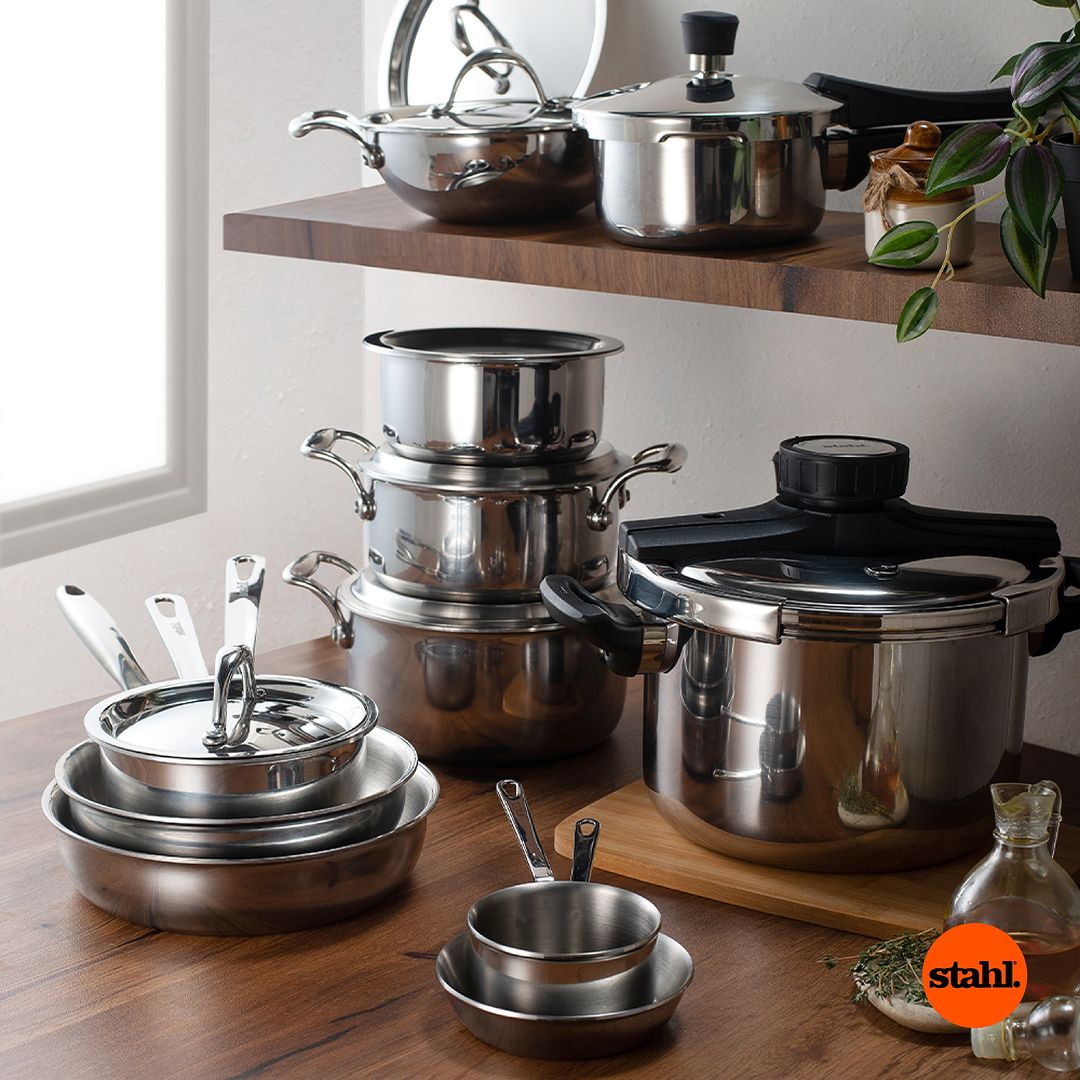
Cooking delicious meals does not require an exhaustive 20-piece set. In fact, such sets usually include unnecessary pieces which just accumulate dust. Instead, consider gradually building your collection piecemeal by choosing materials suited for specific tasks – often selecting materials which provide greater versatility for tasks at hand.
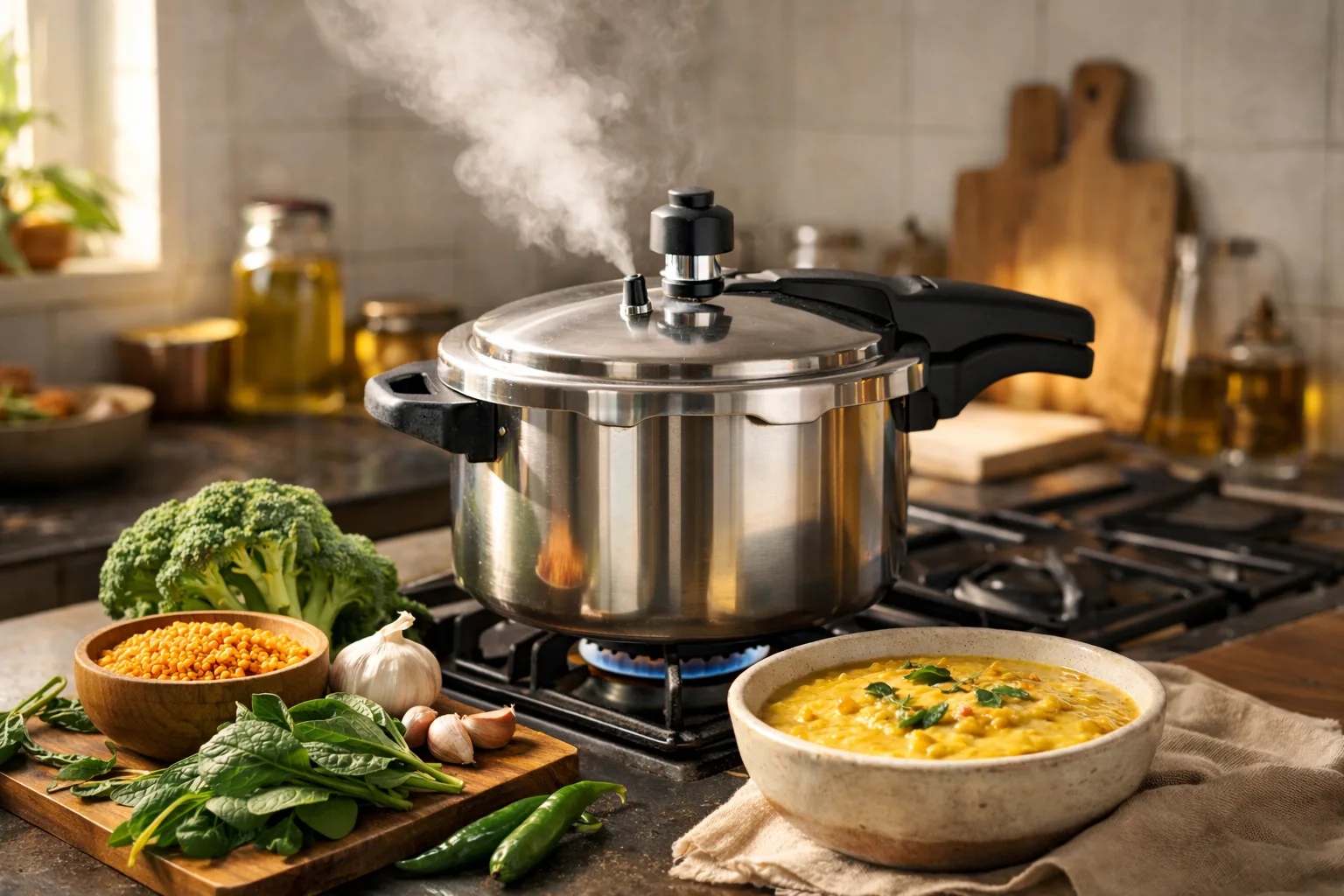
In many households, a pressure cooker has quickly become the go-to time saver. Utilising trapped steam to quickly elevate water’s boiling point, these time machines allow food to cook substantially more rapidly than conventional methods.
Why You Need One:
When purchasing a pressure cooker, safety must always come first. Modern cookers feature multiple safety valves and locking lids; stainless steel models tend to outlive aluminum models when it comes to durability; look for one with a heavy bottom to avoid scorching; 3-liter sizes work great for couples while 5-liter and larger options would suit families best.
Affordable premium alternatives give you most high-end benefits without the higher price tag, great for home kitchens. Browse our complete collection of Pressure Cookers
An all-purpose fry pan (or skillet) is one of the most essential kitchen tools. From making scrambled eggs and sauteeing onions to sear chops and toast spices – everything gets made on it!
What Makes for an Ideal Fry Pan?
In terms of shape, look for flared edges with sloped sides – this promotes evaporation (great for searing!) while making it simple to slide a spatula under food or toss vegetables like an expert.
Weight: When purchasing Frying Pans online, take note of their weight. A quality pan will feel substantial; otherwise it could warp easily and warp easily as time goes on.
Handle: For optimal comfort and heat regulation, riveted handles (those secured directly through the pan) offer greater security than screwed-on ones which tend to wobble over time.
When living in an apartment or not having access to an outdoor grill, an indoor grill pan can become your go-to solution for satisfying grill cravings. These pans feature raised ridges similar to that of an actual barbeque pit for maximum versatility when indoor grilling isn’t an option.
Value-range options provide near-premium performance at a lower price, ideal for daily cooking. Check out our complete selection of Frypans & Grillpans
4. Dosa Tawa: Versatile Cooking
A dosa Tawa is designed with raised ridges to elevate food away from its surface and drain any fat away, thereby making your meal healthier while creating those appetizing, dark char marks on chicken, paneer, vegetables and sandwiches that makes for appetizing bite-size snacks! For best results use cast iron which gets hot enough for true searing action. Generally the Dosa Tawa specializes in flatbread baking only!
Dosa, roti and paratha can’t be properly made in a deep pot or small skillet – for best results you need a special tawa.
Anatomy of a Dosa Tawa:
A dosa tawa is similar to a griddle in that it allows batter to be spread into thin circles without touching any sides or pan.
Cast Iron Vs Non-Stick Surfaces:
There has long been debate as to which material would provide greater results when cooking dosas or pancakes on these devices, both are effective options with their own set of advantages and drawbacks.
Budget-balanced choices combine premium features with better value, suited for routine home cooking. Find the perfect option from our full range of Dosa Tawas
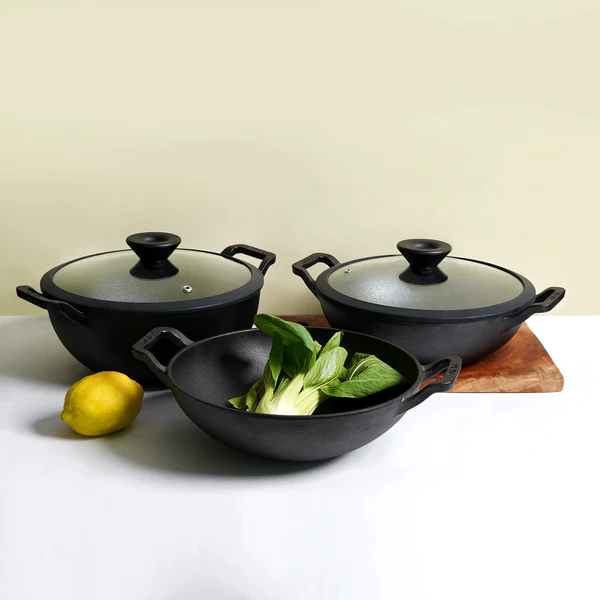
Its A Kadhai (Indian Wok) is essential when deep frying, stir frying or simmering large batches of curry. With deep sides that slop gently away from you and an unconventional shape to keep food moving freely around, its long, narrow base enables more efficient deep frying than flat pans – and with reduced oil usage too!
A saucepan serves as the primary container for liquid handling – be it boiling milk, making tea (chai), reheating soup or making sauces. A vessel with high, straight sides to reduce evaporation as well as an easy pour lip and sturdy handles are key here since often you will be lifting and carrying hot liquid.
Prior to shopping online for cookware, be sure to consider your heat source carefully – otherwise it could lead to serious frustration!
Doesn’t Work: Copper, glass and aluminum (unless equipped with special magnetic steel plates bonded at their bases).
To help make shopping simpler and reduce confusion in the kitchen, we have assembled an assortment of the highest performing products on the market to help cut through all the noise. Whether it be an everyday fry pan or specialist tawa, these categories cover all essentials – like our Tawa Collection!
Essential for Dosas, Rotis, Parathas, Crepes & Pancakes.
Perfect for dosas, rotis, chapatis, and other flatbreads, these tawas offer reliable heating and effortless results. Whether you prefer nonstick convenience or the classic touch of steel, there’s a tawa here for your kitchen.
| Product Name | Specifications | Price |
| Corelle Dura Nano Uncoated Nonstick Flat Tawa 26cm | 26cm, uncoated, nonstick | ₹1,499/- |
| Stahl Hybrid Tawa 25cm | 25cm, hybrid surface, induction friendly | ₹1,790/- |
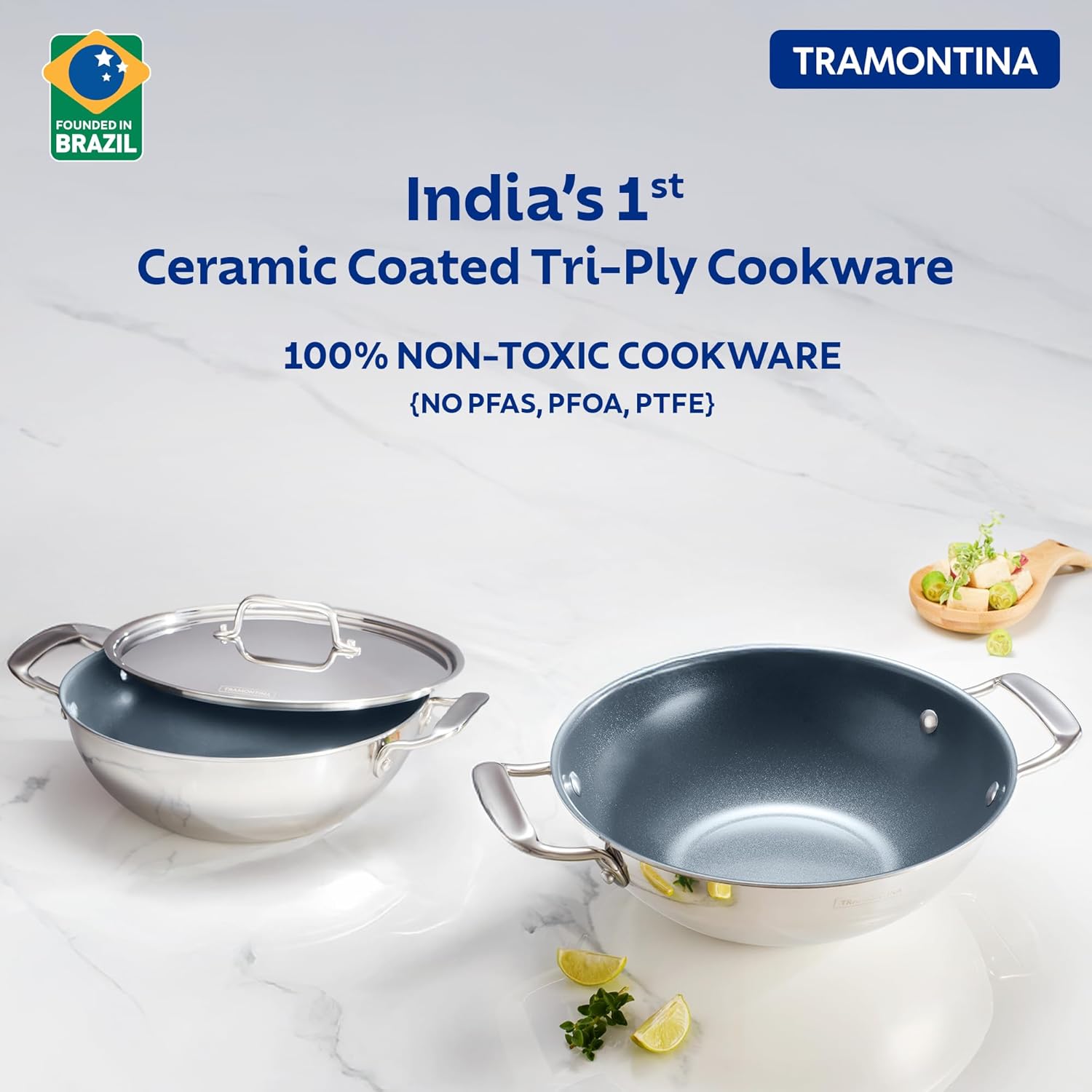
| Tramontina Fusao Triply Stainless Steel Ceramic Dosa Tawa | Triply construction, ceramic coating | ₹3,299/- |
From daily frying to creative sautés, these fry pans stand out for their durability, even heating, and versatility. Browse our top picks for stir-fries, breakfast classics, and beyond.
| Product Name | Specifications | Price |
| Corelle Dura Nano Uncoated Nonstick Frypan | Uncoated, nonstick, durable build | ₹1,699/- |
| Tramontina Velo Forged Fry Pan Sea | Forged aluminum, even heating | ₹2,450/- |
| Stahl Triply Stainless Steel Frypan Artisan Series 2 | Triply stainless steel, stay-cool handle | ₹2,895/- |
Speed up your meal prep with these user-favorite pressure cookers, designed for safety and efficiency. Each cooker offers unique features to make family meals faster and healthier.
| Product Name | Specifications | Price |
| Tramontina Aeion Triply Pressure Cooker | Triply stainless steel, safety lock | ₹4,999/- |
| Stahl Triply Stainless Steel Xpress Pressure Cooker | Triply, fast cooking, induction compatible | ₹4,289/- |
| Stahl Triply Stainless Steel Versatil Pressure Cooker | Triply, versatile usage | ₹4,599/- |
Category 4: Specialty Cookware (Kadhais, Cookpots & Saucepans)
Essential for Deep Frying, Boiling & Simmering.
Kadhai & Cookpot: When selecting Kadhais as well as Cookpots with deep vessels featuring sturdy handles to maintain oil temperature when deep-frying pakoras at high speeds; look out for tri-ply Kadhais which help regulate temperatures so as to absorb less of your chosen frying oil during deep frying ensuring less oil absorption from pakoras during deep fried sessions!
So now that you’ve done the research and spent your cash, how do you ensure the new equipment will stand the test of time? Here is some essential maintenance advice to ensure the lifelong success of your purchase!
Rainbow Stains: When steel surfaces acquire rainbow-like discolorations due to heat tinting, simply rubbing lemon juice or vinegar onto them will quickly restore its shine and bring back its shine instantly.
Soft Sponges Only: Green sponges’ abrasive side may be too harsh for non-stick surfaces; for optimal non-scratch results use either the soft side of a green sponge, or invest in one designed specifically to protect non-scratch pads.
Storage: When stacking pans, place paper towels or felt protectors between each pan so the metal bottom doesn’t scratch the non-stick coating on another one below it.
Shopping cookware online is convenient, yet without being able to physically hold and test each item you purchase can lead to buyer’s remorse and regret. Here is how you can prevent it:
Cooking should not be seen as an intimidating chore but as part of an enjoyable part of daily life – and often comes down to what tools are in your arsenal for use when creating delicious dinner dishes.
When faced with an awkward pan that spins on the stove or “non-stick” skillet that holds on tightly to your eggs like glue, rather than your cooking skills being at fault – equipment does!
When investing in quality equipment–be it a dependable pressure cooker to simplify weeknight dinner prep, an exquisite fry pan that sears to perfection or an ancient dosa tawa that produces crispy delight–you are investing more than simply in metal; rather you are investing in reliability and in yourself to try new recipes with confidence.
Reassess what you cook most frequently and prioritize pieces that reflect your culinary style. Search the wide collection available, read reviews and don’t be intimidated to invest in quality pieces – your kitchen deserves one that works as hard for you as it should do! Take time to assess which collections best meet this need before shopping any recommended upgrades that could give it that special something extra. Ready to transform your culinary experience? Explore the recommended collections at Vistaya Store and give your kitchen the upgrade it deserves.
Shop Pressure Cookers | Shop Tawas | Shop Frypans
Hard-anodized aluminum or high-quality nonstick would make the best material to start out cooking on, since these types of materials heat evenly while keeping food from sticking, helping reduce frustration as you learn the ropes of culinary school.
In general, no. While ceramic is tougher than typical Teflon cookware, metal utensils could still cause micro-chipping of its glaze over time and compromise its nonstick properties; wood or silicone would likely provide better nonstick qualities than metal alternatives.
Stainless steel contains pores which grip food when cold. To stop sticking, try the “Mercury Ball Test,” heating an empty pan until a drop of water rolls around like a mercury ball instead of sizzling and evaporating when added into it; add oil when heating is complete then your food.
In terms of performance, typically yes. Heavy pans hold heat more effectively and warp less, although you must ensure it remains light enough to lift comfortably when filled. For those suffering wrist issues who need something lighter yet still high-performing tri-ply pans are an option that offer similar results.
Initially, season the Dosa Tawa 3-4 times before its first use and use oil when cooking dosas to maintain seasoning levels. Occasionally add extra seasoning if dosas start sticking or appear grey; quick applications of oil may do just as well to rejuvenate it further if need be.
Yes, online cookware shopping can be safe when done from reputable retailers. Look for sites offering detailed specifications (weight, thickness of material used and dimensions) along with an easy return policy should your item arrive damaged.
A fry pan typically features sloped sides for easier food turning; its lid usually offers straight vertical walls; plus this style offers greater surface area which holds liquid better, making them suitable for braising or poaching applications.
No matter if the box says, “Dishwasher Safe”, do not place non-stick items into a dishwasher because its harsh detergents and high temperatures degrade its non-stick coating much quicker than hand washing would do.
Chefs abuse their pans — throwing them into ovens, banging them on burners and quickly scrubbing them clean after use — which requires durable material capable of withstanding that kind of treatment while still offering optimal browning and flavor development results. Stainless steel stands up well under such strain.
A 3-liter to 5-liter pressure cooker would work perfectly in accommodating four adults; three liters are great for daily dal or rice dishes while five provide more space to make meat or whole vegetable meals.
The Complete Guide to Buying the Perfect Dosa Tawa

Smart Storage Solutions Organisers Containers Essentials
Top 10 Must-Have Household Essentials for a Functional Kitchen