15 Diwali Gift Ideas for Family & Friends in India (2026)
23 October 2026

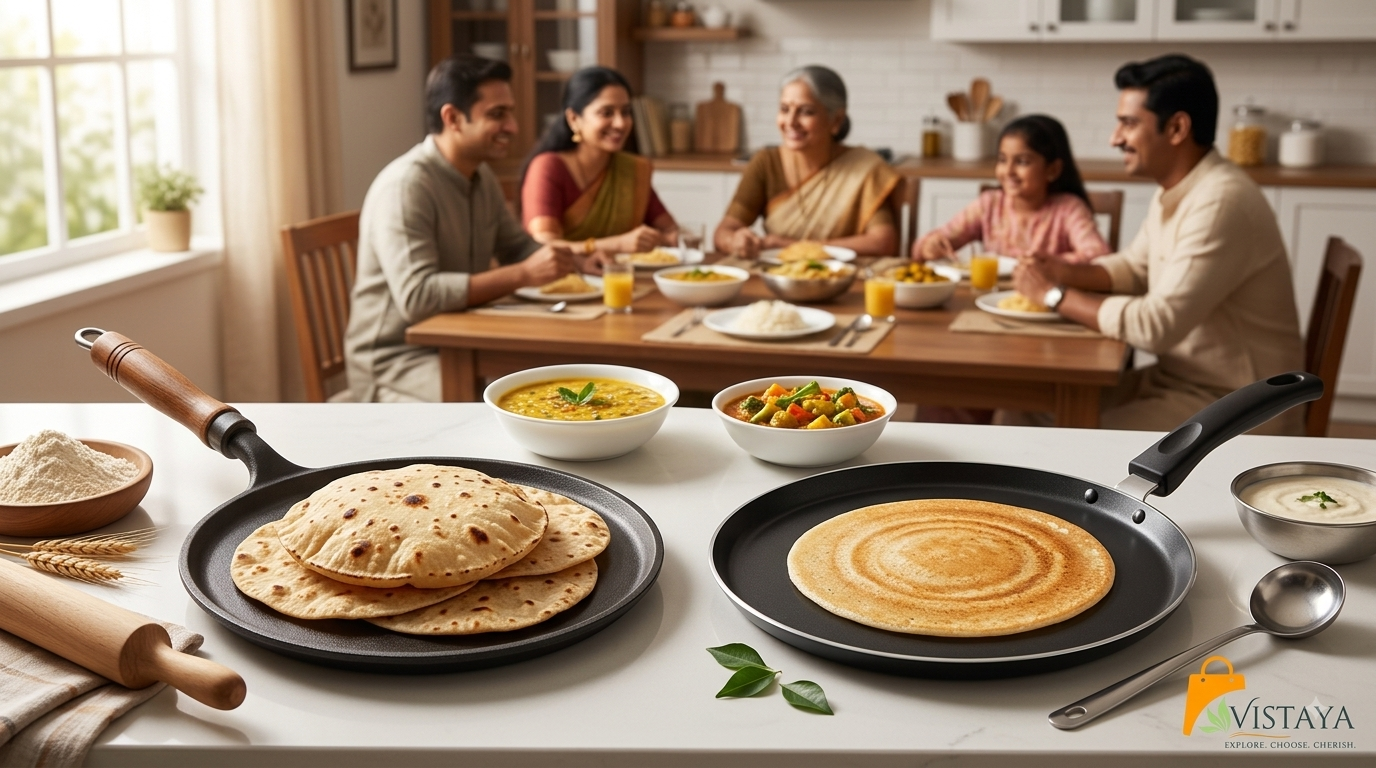
Every Indian kitchen has had this fight at some point. Your mother swears by the heavy iron tawa she has used for twenty years. Your sister insists a non stick pan is the only sane choice for a working parent with fifteen minutes to make breakfast. Both of them are a little bit right, and this guide will tell you exactly when.
If you’re comparing cast iron vs non stick tawa because you’re about to buy one, you don’t need another article listing pros and cons without answering the real question. You need to know which one fits your actual kitchen, your actual health goals, and your actual patience level. That’s what this guide does, using the same criteria we use when picking cookware for our own best tawa for roti
The direct answer: cast iron wins for durability, heat retention, and iron content, while non stick wins for convenience, low oil use, and ease for beginners. There is no universal winner. A joint family doing daily rotis and dosas will get more value from cast iron over time. A small household short on time will likely prefer non stick.
Both options can be excellent tawa for Indian cooking. What actually decides the winner is your cooking frequency, your willingness to maintain the pan, and whether metal spatulas are a habit you cannot break.
Cast iron has been the backbone of Indian kitchens for generations, and the reasons go beyond nostalgia.
The catch is seasoning. A raw cast iron tawa needs oiling and slow heating a few times before it behaves properly, and it can rust if left wet. Once broken in, though, it becomes one of the lowest maintenance, longest lasting pans you’ll ever own. If you want the full process, our complete dosa tawa buying guide
Non stick cookware exists for a reason, and for many households it is the more practical daily choice.
The tradeoff is lifespan. Even good quality coatings wear down after a few years of regular use, especially with metal utensils or dishwasher cycles. If you go this route, look for PFOA free coatings and a thick base of at least 3mm, since thin non-stick pans warp quickly on Indian gas stoves that run hot.
For daily chapati and roti, the deciding factor is heat consistency, not just surface finish. A flat, thick based cast iron tawa gives the most even puff and browning because it holds a steady temperature across the whole surface. Tri ply stainless steel tawas, like the Bergner Argent Samsara tri ply roti tawa, are also a strong middle ground since they combine even heating with a naturally non reactive surface that doesn’t need seasoning.
Avoid thin, lightweight tawas for rotis regardless of material. They heat unevenly and burn edges before the centre is cooked.
Dosa needs a slightly different profile than roti. You want a smooth, flat, heavy surface that holds consistent heat while you spread the batter thin. This is where cast iron tawa genuinely shines, since its heat retention keeps the surface hot even as cold batter hits it, giving you that crisp golden edge dosas are known for. Quality non-stick dosa tawas work too, particularly for beginners still learning to spread batter evenly, since the forgiving surface reduces sticking mistakes.
If health is your main concern, this is where the comparison gets interesting. Cast iron cookware is widely considered one of the healthiest tawa for cooking options because it is completely inert. It doesn’t leach chemicals, and it adds trace dietary iron rather than removing anything beneficial.
Non stick pans are safe when used correctly, meaning below their rated temperature and without scratching the coating, but damaged or overheated coatings raise valid safety concerns. For families cooking daily at high heat, cast iron and stainless steel remain the safer long term bet.
This is the step most first time buyers skip, and it’s the reason so many people give up on cast iron after one bad experience.
Once seasoned, avoid harsh detergents. Rinse with hot water, dry immediately, and rub a few drops of oil across the surface before storing. This one habit is what makes the difference between a cast iron tawa that lasts one year and one that lasts twenty.
If your kitchen runs on an induction cooktop, not every tawa will work, and this trips up a surprising number of buyers. Induction needs a magnetic base, which most standard non-stick tawas don’t have unless specifically labelled.
This matters more than people realise, since buying the wrong base for your stove is one of the most common and avoidable mistakes in tawa shopping.
| Factor | Cast Iron Tawa | Non Stick Tawa |
|---|---|---|
| Heat retention | Excellent, very even | Good, can have hot spots |
| Maintenance | Needs seasoning and drying | Wash and store, no seasoning |
| Lifespan | Decades with care | 3 to 5 years typically |
| Oil needed | Moderate, less once seasoned | Very low |
| Health profile | Adds dietary iron, inert surface | Safe if used correctly, coating wears |
| Induction friendly | Naturally magnetic | Only if base is rated for it |
| Best for | Daily heavy use, joint families | Quick meals, smaller households |
Not all cast iron sold in India is equal. A few things separate a good pan from a frustrating one.
Before buying non stick, run through this quick checklist so you don’t end up replacing it within a year.
A cheap non stick tawa for chapati looks like the budget choice at first glance, but the maths changes once you factor in replacement cycles. A mid range non stick pan bought every three to four years works out more expensive over a decade than a single well made cast iron tawa bought once. Cast iron does cost more upfront, and it does need a small ongoing investment in oil for seasoning, but there’s no repeat purchase involved.
For families who cook daily and plan to stay in the same kitchen for years, this makes cast iron the better long term value, even if the smaller monthly outlay feels less painful with non stick.
There isn’t a single correct answer to cast iron vs non stick tawa, only the answer that fits your kitchen. If you cook daily, want durability, and don’t mind a short learning curve, cast iron rewards you for years and often works out cheaper over time. If convenience and quick cleanup matter more right now, a good quality non-stick tawa will serve you well. Either way, buying from a trusted source matters just as much as the material itself.
You can explore genuine, quality checked options in our tawa collection online, or read our guide on choosing between casserole, kadhai, and tasla if you’re rounding out the rest of your cookware collection too.

15 Diwali Gift Ideas for Family & Friends in India (2026)
Artificial Jewellery Online: What to Check Before You Buy
Top 10 Best Pressure Cookers in India 2026: Reviews & Buying Guide
10 Best Gifts for Ganesh Chaturthi 2026
Top 10 Best Cookware Brands in India: A Complete Buying Guide for 2026
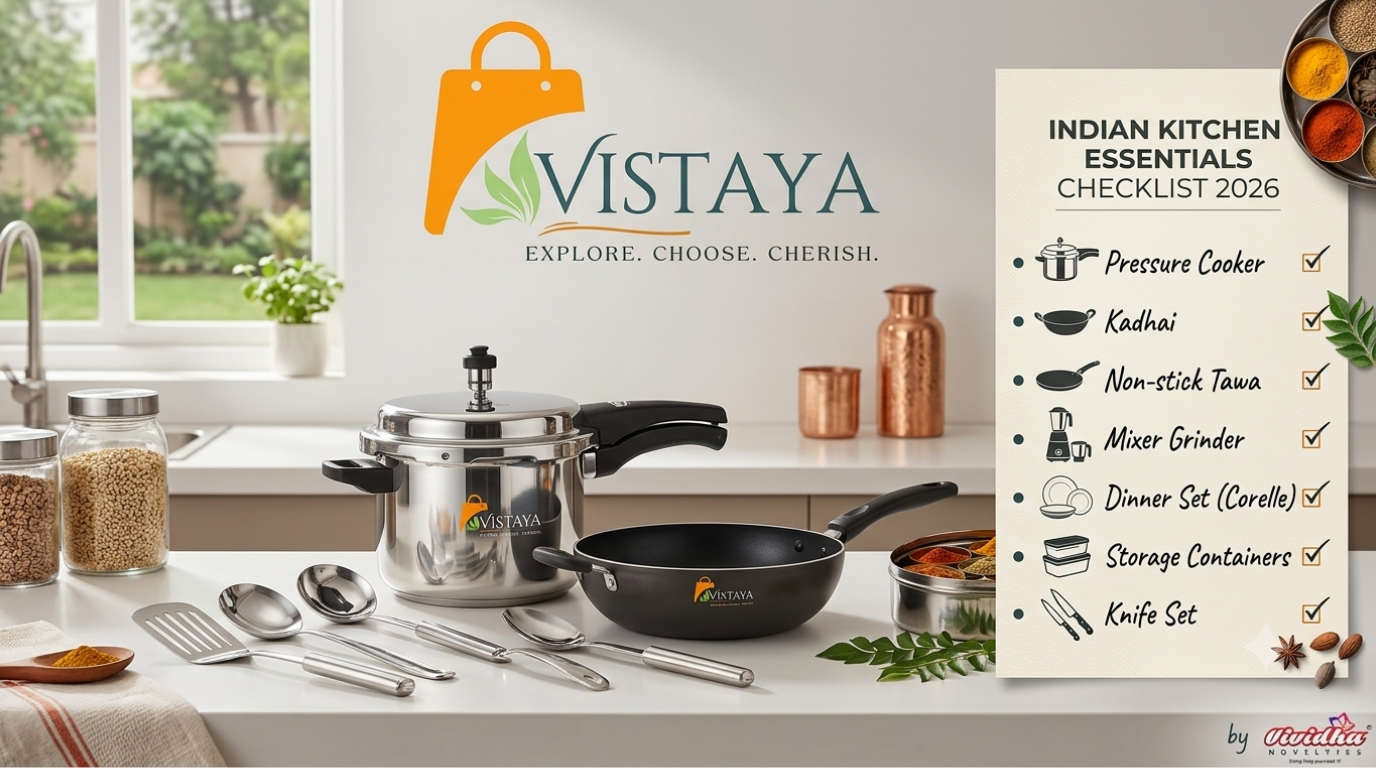
Indian Kitchen Essentials Checklist 2026
Top 7 Kitchen Gift Ideas for Raksha Bandhan 2026