Dining in 2026: The Essential Playbook for Choosing Modern Crockery
03 February 2026

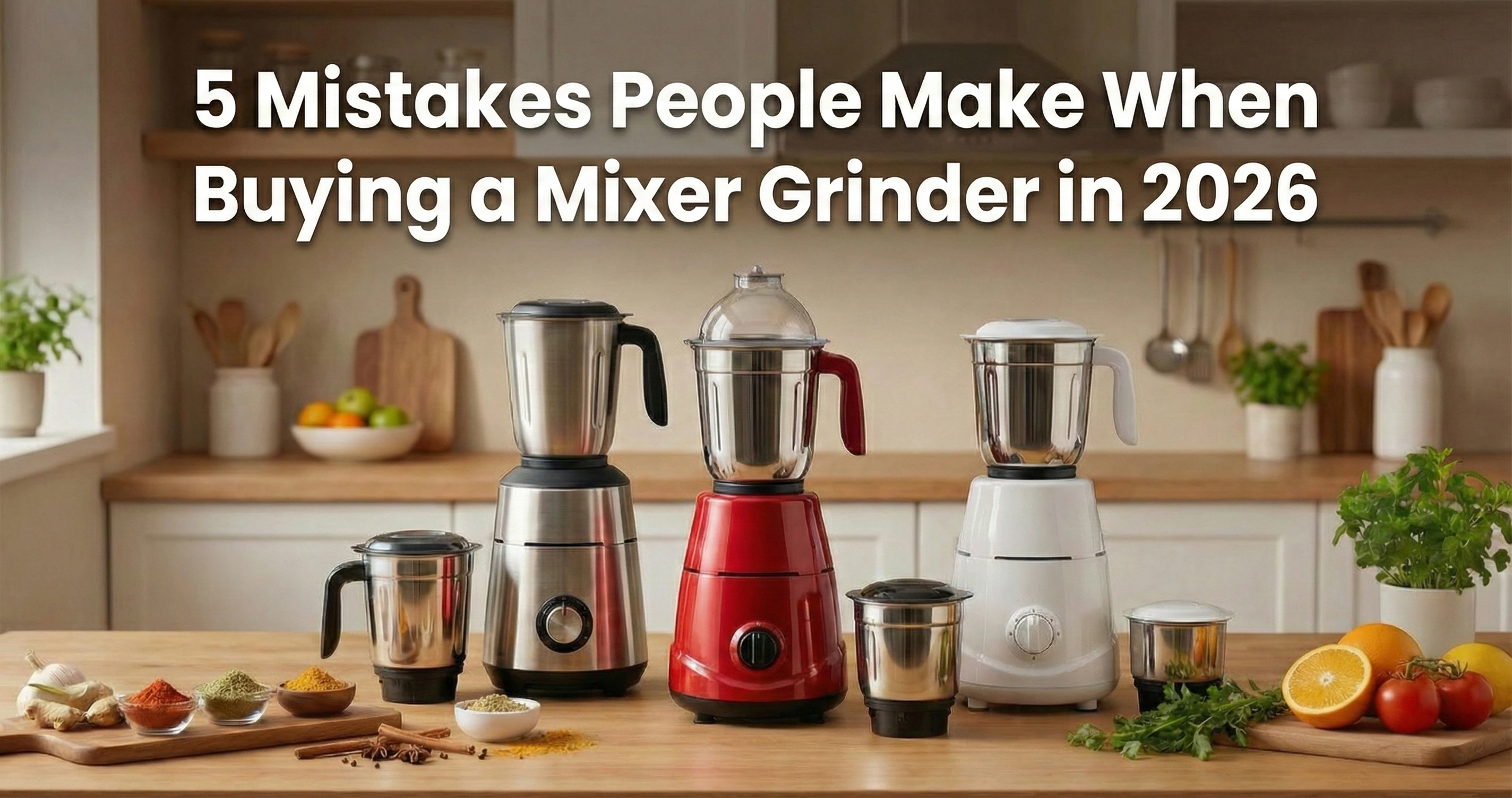
Ever stood in a kitchen store staring at twenty different mixer grinders, completely confused? Same-looking motors, similar jars, wildly different prices. One salesperson pushes 750 watts, another insists 1000 is mandatory, someone else starts rambling about BLDC motors.
Here’s what nobody admits: buying a mixer grinder gets unnecessarily complicated by marketing nonsense. What actually matters? Power that handles your real cooking—daily chutneys, grinding masalas, making dosa batter, blending morning smoothies.
This guide skips the sales pitch. Which wattage genuinely works? Which brands last past warranty? What should you spend? What features actually help versus what’s just fancy talk?
Let’s figure out picking a mixer grinder that survives your kitchen without dying in eight months.
Forget technical specs. Here’s what these numbers mean when you’re actually cooking:
Works fine if you’re:
Struggles with:
Honest take? These burn out fast if you’re doing serious Indian cooking. Motor just can’t handle the workload long-term.
This wattage dominates Indian kitchens for actual reasons:
For families cooking real meals daily, 750 watt mixer grinder just works. Not overkill, not underpowered. Right in the middle.
Only makes sense if you’re:
More power means faster work, cooler running, longer life. But you’re paying extra upfront and slightly higher electricity bills. Worth it? Only if you genuinely need that muscle.
Bottom line: Small household doing basic cooking? 500W works. Regular family making typical Indian food? Go 750W. Large family or commercial use? 1000W pays off.
| Wattage | Best For | Typical Lifespan | Price Range |
|---|---|---|---|
| 500-600W | 1-2 people, light use | 2-4 years | ₹2,000-₹4,000 |
| 750W | 3-5 people, regular cooking | 5-8 years | ₹4,000-₹8,000 |
| 1000W+ | Large families, heavy use | 8-12 years | ₹6,000-₹12,000 |
Mixers come with two to five jars. More isn’t better—it’s about having the right ones.
Wet Grinding Jar (Big one, 1.5-2 liters): Your workhorse. Makes batters, blends smoothies, handles anything liquid-heavy. Gets used most often.
Dry Grinding Jar (Medium, 0.5-1 liter): Spice powders, coffee beans, dry chutneys, nuts. Different blade design. Essential for proper grinding.
Chutney Jar (Small, 0.3-0.5 liters): Daily coconut chutney, ginger-garlic paste, small batches. Most households use this every single day.
Juicer Jar (Optional, often useless): Comes with mesh filter. Sounds great, works okay. Dedicated juicers do this job way better. This jar mostly sits unused.
Real talk? Three jars handle everything. Wet, dry, chutney. Fourth jar adds utility. Five jars? Marketing. You’ll use three regularly and forget the rest exist.
Brand matters hugely for mixers. Motor quality varies drastically. Service networks differ completely.
Preethi makes stupidly reliable mixers. South Indian cooks swear by Zodiac series—makes perfect batter every time. Heavy-duty motors that just don’t quit.
Sujata builds commercial-grade stuff. Costs serious money. Lasts literal decades. The kind your mom used, still works, will outlive you.
Atomberg brings smart technology that actually helps. BLDC motors save electricity. App control sounds gimmicky but works surprisingly well. Modern design looks great.
The Atomberg Zenova mixer grinder stands out with intelligent features and real energy savings. Check current price at Vistaya Store.
Bosch delivers German reliability without German prices. The Bosch 1000W mixer grinder performs well, lasts long, reasonable cost. Available at Vistaya Store.
Philips stays consistent. Nothing flashy, just works. Service centers everywhere. Safe choice.
Bajaj costs less, works fine. Not fancy. Gets the job done for regular families.
Prestige, Butterfly, Maharaja fit here. Work initially. Die faster—usually 2-3 years. Fine for starter kitchens or very light use.
Here’s the math people miss: ₹7,000 mixer lasting ten years costs ₹700 per year. ₹3,000 mixer dying in two years costs ₹1,500 per year. Calculate annual cost, not just purchase price.
Stainless steel wins for Indian cooking. Turmeric stains plastic permanently. Steel wipes clean, lasts forever, handles hot stuff safely. Can’t see inside while grinding—minor issue.
Plastic (polycarbonate) lets you see what’s happening. Lighter weight. Breaks less easily than glass. But discolors over time. Cheap plastic retains smells.
Glass looks nice, stays hygienic. Breaks if you sneeze near it. Heavier. Rare nowadays.
For daily turmeric-heavy cooking, steel beats plastic long-term.
Good blades stay sharp for years. Cheap blades dull fast—longer grinding, more motor strain, terrible results. Stainless steel blades resist rust. Sharp edges that actually stay sharp matter more than blade count.
Worth Paying For:
Marketing Fluff That Doesn’t Matter:
Spend money on motor quality and blade sharpness. Those determine whether it works or dies.
Light User: Cook few times weekly, basic tasks → 500-600W sufficient
Regular User: Daily cooking, typical Indian meals, 3-5 people → 750W recommended
Heavy User: Large family, daily grinding, weekly batters → 1000W worth it
Under ₹3,000 – Entry brands, short life, basic features
₹3,000-₹5,000 – Reliable brands, decent longevity
₹5,000-₹8,000 – Quality brands, good lifespan
₹8,000-₹12,000 – Premium brands, lasts decade-plus
Motor type – Induction (traditional), Universal (powerful), BLDC (efficient like Atomberg)
Warranty – Minimum two years. Five-plus on motor better. Read what’s actually covered.
Service – Centers in your city? Parts available? Support responsive?
Must have:
Avoid:
Looking to buy mixer grinder online with confidence?
Atomberg Zenova (4 Jars, Multiple Colors)
Smart BLDC motor, energy-efficient, app control that actually helps. ₹6,600 (45% off). Next-generation technology that saves electricity while delivering power.
Perfect for modern households wanting efficiency plus performance. Shop Atomberg Zenova
Bosch 1000W (3 Jars)
German engineering, powerful motor, handles anything. ₹6,199 (36% off). Proven reliability for heavy-duty daily use.
Ideal for families doing serious cooking. Decades of trust.
Preethi Zodiac (750W, 5 Jars)
Legendary for South Indian cooking. Perfect batter every time. ₹8,099 (26% off). Premium quality for cooking enthusiasts.
Vidiem VSTAR ADC (1000W)
Commercial-kitchen quality at home. Built tough, runs cool. ₹9,900 (37% off). Premium pricing, premium quality.
All available at Vistaya Store – genuine products, secure payment, doorstep delivery.
Mistake 1: Cheapest price wins. Wrong. Calculate cost per year, not initial price.
Mistake 2: Ignoring wattage needs. Underpowered motor burns out fast with heavy use.
Mistake 3: Too many jars. Five jars clutter kitchen. You’ll use three anyway.
Mistake 4: Unknown brand. Good luck finding service when it breaks.
Mistake 5: Skipping warranty details. What’s covered? How long? Read fine print.
Mistake 6: Not testing locks. Flimsy locks mean accidents and leaks.
Rinse jars immediately after use. Wipe base unit. Dry jars completely. Don’t store jars attached to base.
Clean all jars thoroughly. Check blade sharpness. Inspect coupler. Clear dust from vents.
Do: Use right jar for each task. Add liquid with tough items. Give motor breaks. Lock jars securely.
Don’t: Overload jars. Run dry. Force struggling motor. Bang jars. Store damp.
Won’t start – Jar locked? Power connected? Overload reset needed?
Blades don’t spin – Coupler damaged? Obstruction present?
Grinds poorly – Blades dull? Jar overloaded? Wrong jar used?
Overheats often – Running too long? Vents blocked? Motor aging?
Good mixers last 7-10 years with care. Premium ones go 12-15 years.
750W mixer running 30 minutes daily costs about ₹88 monthly (₹1,056 yearly).
1000W same usage costs about ₹120 monthly (₹1,440 yearly).
Difference? ₹380 annually. Negligible. Don’t choose based on power consumption alone.
BLDC motors (Atomberg) save 30-40% electricity—₹300-400 yearly. Worth considering over years.
Mixer Grinder beats Food Processor for: Indian cooking, chutneys, masalas, batters, compact storage, lower price.
Food Processor beats Mixer for: Chopping vegetables, kneading dough, slicing, Western cooking.
For Indian households, mixer grinder matters more. Food processors are extra, not replacement.
Mixer beats Blender for: Grinding spices, thick pastes, batters, versatility.
Blender beats Mixer for: Smoothies (smoother), large liquids, crushing ice.
Both serve overlapping but different purposes.
Diwali/New Year sales – Expect 20-40% off
Month-end sales – Retailers clearing targets
New launches – Previous models get discounted
Buy online when: Research done, established brand, better prices, good reviews, return policy exists.
Buy offline when: Want to test locks, unsure specs, see actual product, need immediately.
Vistaya Store combines both – online convenience, product authenticity. Browse collection.
Which mixer grinder is best in India?
For typical Indian homes, the best mixer grinder balances power and price. Preethi Zodiac excels for South Indian cooking. Sujata offers commercial quality. Atomberg brings smart efficiency. Choose 750W for regular families, 1000W for heavy use, 500W for basic cooking.
How many watts mixer grinder is good for home?
750 watts works best for regular Indian cooking. Handles daily chutneys, masalas, batter without struggling. 500-600W suits small households with light use. 1000W+ for large families or commercial needs. Match wattage to actual cooking habits.
Which brand is best for mixer grinder?
Top brands: Preethi (excellent batters), Sujata (extreme durability), Atomberg (smart features, efficiency). Reliable mid-range: Bosch, Philips. Budget: Prestige, Butterfly. Best brand depends on budget—Preethi for traditional cooking, Atomberg for modern tech, Sujata for longevity.
What is difference between 500W and 750W mixer grinder?
750W handles tough ingredients (dried coconut, hard spices) without strain. Processes faster, runs cooler, lasts longer with heavy use. 500W works for basic tasks but struggles with tough jobs, overheats faster, shorter motor life. The 250W difference significantly impacts performance for Indian cooking.
How to choose mixer grinder?
Start with wattage—750W for regular use. Check jar configuration (wet, dry, chutney essential). Verify brand reputation. Confirm overload protection. Read recent reviews. Calculate cost-per-year. Ensure local service centers. Test jar locks if possible. Match features to actual cooking, not marketing.
Which is better: stainless steel or plastic jars?
Stainless steel lasts longer, resists turmeric staining, handles hot liquids safely. Plastic allows seeing contents, weighs less, breaks less easily. For Indian cooking with spices, steel wins long-term. Plastic works but discolors. Many mixers combine both.
Is 1000 watt mixer grinder necessary?
For most homes, no. 750 watts handles typical Indian cooking perfectly. 1000W benefits large families, commercial use, or frequent heavy-duty grinding. Costs more, uses slightly more electricity. Only necessary if regularly processing large tough quantities.
How long do mixer grinders last?
Budget models (₹2,000-₹3,000) last 2-3 years. Mid-range (₹4,000-₹7,000) run 5-7 years. Premium (₹8,000+) go 10-15 years with care. Sujata mixers last 15-20 years. Longevity needs regular cleaning, proper use, adequate breaks.
Can mixer grinders make dosa batter?
Yes. Good mixer grinder with wet jar makes excellent batter. 750W minimum recommended. Preethi excels at this. Add ingredients gradually, use enough water, don’t overload. Modern mixers produce great results for home quantities.
What is best mixer grinder under ₹5,000?
Look for 750W from Bajaj, Prestige, or Butterfly. Expect 3-4 jars, basic controls, 2-year warranty. Handles regular cooking adequately. Check model-specific reviews—quality varies within brands. Vistaya Store offers verified options.
Are more jars better?
Not really. Most families use 3 jars—wet, dry, chutney. Extra jars create storage problems, rarely get used. Focus on jar quality over quantity. Four jars work if each serves distinct purpose. Five+ usually includes redundant options.
How to reduce mixer grinder noise?
Rubber feet reduce vibration. Use stable surface. Don’t overload jars. BLDC motors (Atomberg) run quieter. Ensure proper jar locking. Regular maintenance helps. Expect 70-85 decibels normally—quieter models cost premium.
Choose the best mixer grinder by matching specs to real usage. Don’t overthink, but don’t just grab cheapest either.
Quick Framework:
Small households, basic cooking:
Regular families, typical Indian meals:
Large families, heavy use:
Mixer grinders at Vistaya Store cover all categories. Atomberg offers smart features. Bosch provides 1000W power affordably. Preethi delivers proven excellence. Vidiem brings commercial quality.
Calculate cost-per-year. Read recent reviews. Verify service. Match wattage to needs. Get steel jars when possible. Ensure overload protection.
Buy with confidence and stop overthinking.
Ready to upgrade? Explore genuine mixer grinders with secure payment at Vistaya Store. Browse complete collection plus neccesary home appliances for your kitchen.
Dining in 2026: The Essential Playbook for Choosing Modern Crockery

Best Housewarming Gifts India 2026 Kitchen Essentials Gift Ideas
The Complete Guide to Buying the Perfect Dosa Tawa
The Ultimate Guide to Buying Cookware Online

Smart Storage Solutions Organisers Containers Essentials
Top 10 Must-Have Household Essentials for a Functional Kitchen